
Table of Contents
- What counts as commercial storage in NYC?
- Who needs business storage in New York?
- E-commerce sellers with inventory overflow
- Contractors and trades
- Restaurants, bars and cafes
- Event producers, retail and pop-ups
- Offices with records and overflow
- What are your options for commercial storage units in NYC?
- Self storage units for business use
- Warehouse space or a 3PL
- Flex and coworking space
- In-building storage
- What matters most when you choose business storage in NYC?
- Access hours that match your working hours
- Deliveries, loading and the curb
- Insurance and what it covers
- Unit size: plan for your busiest month
- Cost: compare the full monthly total
- Where Stuf fits for NYC businesses
- Frequently Asked Questions
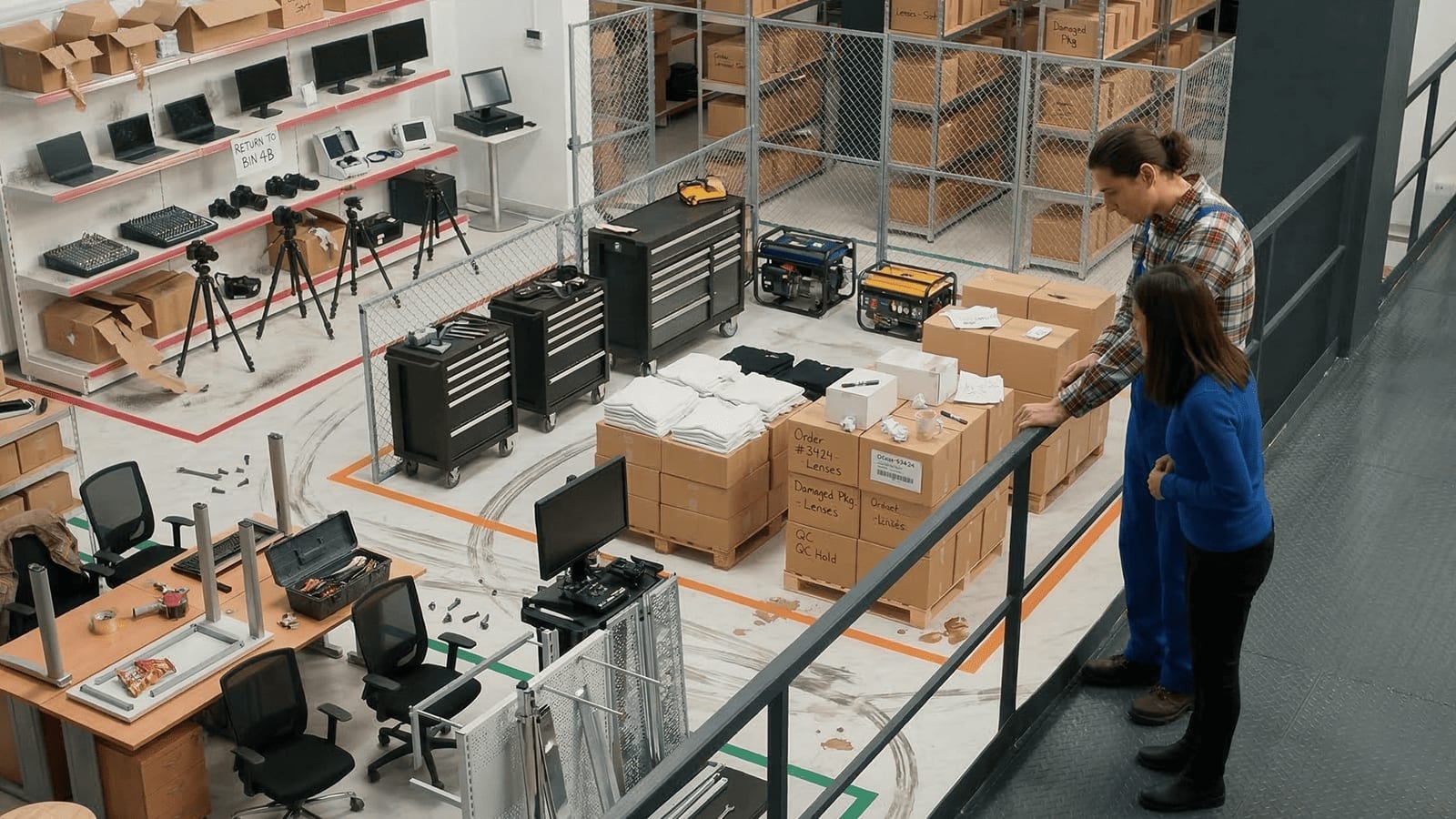
Plenty of small businesses in New York don't need a warehouse. They need somewhere close by that holds the overflow: the 40 cases of product that arrived early, the tile saw that won't fit in the van, the patio heaters from last winter, the seven years of tax files nobody wants in the office.
For a business with fewer than 20 people, commercial storage in NYC usually means a unit within a short drive or subway ride of where the work happens.
This guide covers who uses business storage in the city, the four options you have (and what each one is good and bad at), and the handful of details that decide whether a space works for you or becomes a monthly bill you resent.
What counts as commercial storage in NYC?
Commercial storage is any space a business rents to hold inventory, equipment, fixtures or records outside its main workplace. In New York, that covers four very different products: self storage units rented for business use, warehouse space or a third-party logistics (3PL) provider, flex or coworking space with storage attached, and storage inside the building you already occupy.
They get lumped together in search results, but they solve different problems. A 3PL ships your orders for you. A self storage unit doesn't ship anything, but you can get into it on a Sunday without asking anyone. Knowing which problem you have is most of the decision.
If you've already narrowed it to a warehouse or a storage unit, our warehouse vs. business storage units comparison goes deeper on that specific choice.
Who needs business storage in New York?
Five kinds of businesses come up again and again. If you see yourself in one of them, you can skip a lot of generic advice.
E-commerce sellers with inventory overflow
The classic case is a seller whose apartment has become a stockroom. Product arrives in bulk, ships out in ones and twos, and the boxes in between need a home that isn't the living room.
A unit works well here when you pack and ship orders yourself and visit a few times a week. It stops working when daily order volume means you're making the trip every day. At that point, a 3PL that picks, packs and ships for you starts to earn its fees.
Contractors and trades
Electricians, plumbers, painters and renovation crews deal with a familiar New York problem: there's nowhere to leave anything. Tools in a parked van are a theft risk overnight, and many job sites won't let you leave gear between visits.
A ground-floor or elevator-served unit near your usual jobs lets you load in the morning and drop off at night. One thing to check before you sign: gas cans, fuel-filled generators, solvents and other flammables are typically banned at self storage facilities, Stuf included. Drain equipment first or plan another home for it. Our guide to protecting business equipment in storage covers prep for power tools and electronics.
Restaurants, bars and cafes
Every square foot of restaurant space in New York has to earn money, so what usually needs a home is seasonal: outdoor furniture and heaters, holiday decor, catering equipment that comes out a few times a year, and backup smallwares.
Food itself is a different story. Perishable food is commonly on self storage prohibited lists (it is at Stuf), so dry goods and ingredients belong with your distributor or in your own space.
Event producers, retail and pop-ups
Event companies and retailers store things that are bulky, fragile and used in bursts: displays, signage, staging, linens, AV gear, fixtures between store resets. Access patterns matter more than size here, because load-in days start early and load-out runs late. We wrote a full guide to storing event equipment for this group.
Offices with records and overflow
Law firms, accounting practices, medical offices and agencies all accumulate paper. The IRS says you should keep most tax records for three years, employment tax records for at least four, and records supporting a bad debt deduction for seven. That adds up to a lot of banker's boxes, and none of it needs to sit in office space you're paying Manhattan rent on.
Paper and electronics both do better with stable temperature and humidity, so look for climate control for this kind of storage.
What are your options for commercial storage units in NYC?
Here's how the four options compare at a glance. The right one depends on how often you need access and whether you need anyone else to handle your goods.
| Self storage unit | Warehouse or 3PL | Flex or coworking space | In-building storage | |
|---|---|---|---|---|
| Best for | Inventory, tools, fixtures, records you handle yourself | High-volume shipping, pallets, freight | Teams that need a desk and a small stock area | Small amounts, used daily |
| Lease length | Often month-to-month | Usually contract-based | Varies, often monthly | Tied to your main lease |
| Who handles goods | You | Their staff | You | You |
| Receiving deliveries | Depends on the facility | Yes, it's the core service | Sometimes, at the front desk | Your building's rules |
| Location | Neighborhood-level, close to work | Often outer boroughs or New Jersey | Commercial districts | Already there |
Self storage units for business use
Self storage is the most flexible option for small volumes. You rent a single unit, often month to month, and you're the only one handling what's inside. Sizes run from closet-sized lockers to units that hold a full truckload.
The trade-off: a unit holds your goods but doesn't pack or ship them, and policies on receiving shipments vary a lot between operators: some full-service facilities in the city will sign for deliveries, many won't. Ask before you route inventory to a unit, and if you're looking at Stuf, check with the Member Concierge team about your specific location first.
Warehouse space or a 3PL
A 3PL makes sense once fulfillment is eating your week. They receive pallets, store inventory and ship orders, so you stop being the person taping boxes at midnight.
What you give up is access and flexibility. Getting your own goods back out usually means a request and a fee, contracts and minimums are common, and the fulfillment center may be in another borough or across the river in New Jersey. If you need to grab something by hand, that distance matters.
Flex and coworking space
Some coworking and flex operators rent lockable storage alongside desks or private offices. It's handy if your team needs a workspace anyway and your stock is small. Once storage becomes the main need, you're paying office prices for shelving.
In-building storage
The cheapest square foot is the one you already rent. A basement cage, a back room or a landlord's storage area is worth asking about before anything else. Just read your lease: what's covered by your landlord's insurance, who else has keys, and whether that space is guaranteed or can be taken back.
What matters most when you choose business storage in NYC?
Once you know which option fits, five details decide whether a specific space works. Check them in this order.
Access hours that match your working hours
Access hours are the single biggest point of friction. A contractor starting at 7am and a caterer finishing at midnight need very different answers. Ask for the actual access window in writing, and check whether loading dock hours differ from building access hours, because at some facilities they do.
Also ask who can get in. If an employee needs to pick up stock while you're on a job, you want to be able to add them as an authorized user rather than lend out a key.
Deliveries, loading and the curb
In New York, the curb is often the hardest part. On metered commercial blocks, NYC DOT caps commercial vehicle parking at three hours on a single block unless a sign says otherwise, and DOT describes its loading zones as dedicated curb space meant to cut down on double parking.
Before you choose a location, ask:
- Is there a loading dock, a loading zone or a garage entrance, and what are its hours?
- Is there a freight elevator, and how big is it?
- Are carts and hand trucks available on site?
- Can the facility receive a shipment if you're not there?
A unit five minutes closer means little if your van can't stop out front.
Insurance and what it covers
Many storage facilities require you to insure what you store, so check what the default plan was built for. At Stuf, for example, insurance is required: you can buy a protection plan through Stuf or show proof of your own coverage. The Stuf protection plans from Minico cover up to $5,000 with a $0 deductible.
That's plenty for a few boxes of records. It may not be enough for $30,000 of inventory or a van's worth of tools. Call your business insurance broker and ask whether your commercial property or inland marine policy covers goods at an off-site storage location, and up to what limit. Then send the facility a certificate if you're using your own policy.
Write down what goes into the unit and photograph it before move-in. If you ever need to file a claim, an inventory list with dates and values is the document your insurer will ask for first.
Unit size: plan for your busiest month
Size for your busiest month. An e-commerce seller who stocks up before the holidays, or a restaurant storing outdoor furniture all winter, needs the bigger number for at least part of the year.
A rough guide: a 5x5 holds a few dozen banker's boxes or small stock, a 5x10 fits shelving units plus a tool chest or two, and a 10x10 can take a small office's furniture or a meaningful amount of inventory. Use a storage unit size guide to check your estimate, and leave an aisle. If you can't reach the back of the unit, you'll end up buying things you already own.
Cost: compare the full monthly total
If your first instinct is to rent a bigger office or storefront to make room, run the math first. Commercial rent in New York is quoted per square foot per year, and CBRE put the average Manhattan office asking rent at $80.40 per square foot in Q3 2026. At that rate, every extra 100 square feet of office works out to about $670 a month, usually on a multi-year lease. Office space is rarely the right home for boxes, but it's a useful ceiling. It's also worth asking your landlord what in-building storage costs.
Storage is priced per unit, per month, so get real quotes and compare the full monthly total. Include insurance, any admin fee, and what happens to the rate after the first few months. Our guide to storage rent increases explains what to ask. If the storage is used only for business, the rent may also be deductible; see what the IRS requires for business storage deductions.
Where Stuf fits for NYC businesses
Stuf runs self storage facilities across Manhattan, Brooklyn and Long Island City. Hours are set per location: at 27-01 Jackson Ave in Long Island City, for example, the listed operating hours are 8am to 8pm, seven days a week. Here's what's true at every location, so you can judge the fit honestly:
- Entry is keyless. You and any authorized users you add unlock doors from your phone through the Member Dashboard, which is useful when staff rotate. Our post on keyless self storage for businesses explains how that works for teams.
- Leases are month-to-month with 24 hours' notice to cancel, and rate changes happen no more than once every six months with at least 30 days' notice.
- Every location has 24/7 video surveillance, and every unit comes with a lock.
- Access hours, loading dock hours, elevator access and parking vary by location and are listed on each New York location page.
Stuf doesn't pick, pack or ship orders. If fulfillment is your bottleneck, a fulfillment partner is the better tool, and plenty of businesses use both: a 3PL for daily orders and a nearby unit for returns, samples and seasonal stock.
For a broader checklist of what to look for in any facility, see our business storage features guide. Running a side business from your apartment rather than a storefront? Do you actually need a storage unit in New York? is the place to start.
Frequently Asked Questions
What is commercial storage?
Commercial storage is space a business rents to hold inventory, equipment, fixtures or records outside its main workplace. In NYC, that includes self storage units used for business, warehouse or 3PL space, flex space with storage, and in-building storage rooms.
Can I use a regular self storage unit for my business?
Usually, yes. Many self storage facilities, Stuf included, accept business inventory, tools, fixtures and records. Prohibited items typically include hazardous or flammable materials, perishable food, and anything illegal. Check the rental agreement for the full list.
How does storage compare with renting more commercial space in NYC?
Compare real quotes. As a ceiling, CBRE put the average Manhattan office asking rent at $80.40 per square foot in Q3 2026, and office rent is quoted per year, so 100 extra square feet works out to about $670 a month, usually on a multi-year lease. Storage units are typically rented by the month, so price the full monthly total, including insurance.
Do I need insurance for business storage?
Many facilities require it. Facility protection plans can have coverage caps that suit household goods better than inventory, so if you're storing high-value inventory or equipment, ask your business insurance broker whether your commercial policy covers goods kept off-site.
Can a storage facility receive deliveries for my business?
It depends on the operator. Some full-service facilities advertise package acceptance, and others expect you to be on site. Ask before you send freight to a storage address.
How long should a business keep records in storage?
The IRS generally recommends keeping tax records for three years, employment tax records for at least four years, and records supporting a bad debt deduction for seven. Check with your accountant for anything specific to your industry.
Storage without the fine print
One price, month to month terms, no hidden fees. Plus an extra $50 off each of your first 2 months with code STUFBLOG50.