
A studio apartment in New York averages 487 square feet. A 5x10 storage unit is 50.
That ratio is the problem with most storage size guides. They tell you a 10x20 unit is roughly a one-car garage, which helps if you have a garage to picture. If you live on the fourth floor of a walkup in Bed-Stuy, it tells you nothing you can use.
The question worth answering isn't how many square feet you're renting. It's how many rooms' worth of your apartment you're trying to move into it, and whether the largest thing you own will fit through the door on the way.
Here's the apartment version: what each of the seven sizes holds in furniture terms, how to size a unit without measuring anything, and the two ways people get it wrong in opposite directions.
What Size Storage Unit Do I Actually Need?
Start from the rooms, not the square footage.
Storage sizing has a rule of thumb that survives contact with reality: one small unit per room you're clearing, one medium unit per bedroom of furniture. A closet's worth of seasonal clothes and a few boxes is a 3x5. A bedroom emptied down to the bed frame is closer to a 6x10.
Where that rule breaks is in apartments, because apartment storage is rarely a whole room. It's the half of the living room that stopped working when the second person moved in. It's the bikes. It's the winter half of a wardrobe that has nowhere to go in July.
For that kind of storage, the honest answer is usually smaller than people expect, and the mistake runs in one direction: renting a 10x10 to hold what fits in a 5x5, then paying for 75 square feet of air every month for a year.
What Fits in Each Storage Unit Size?
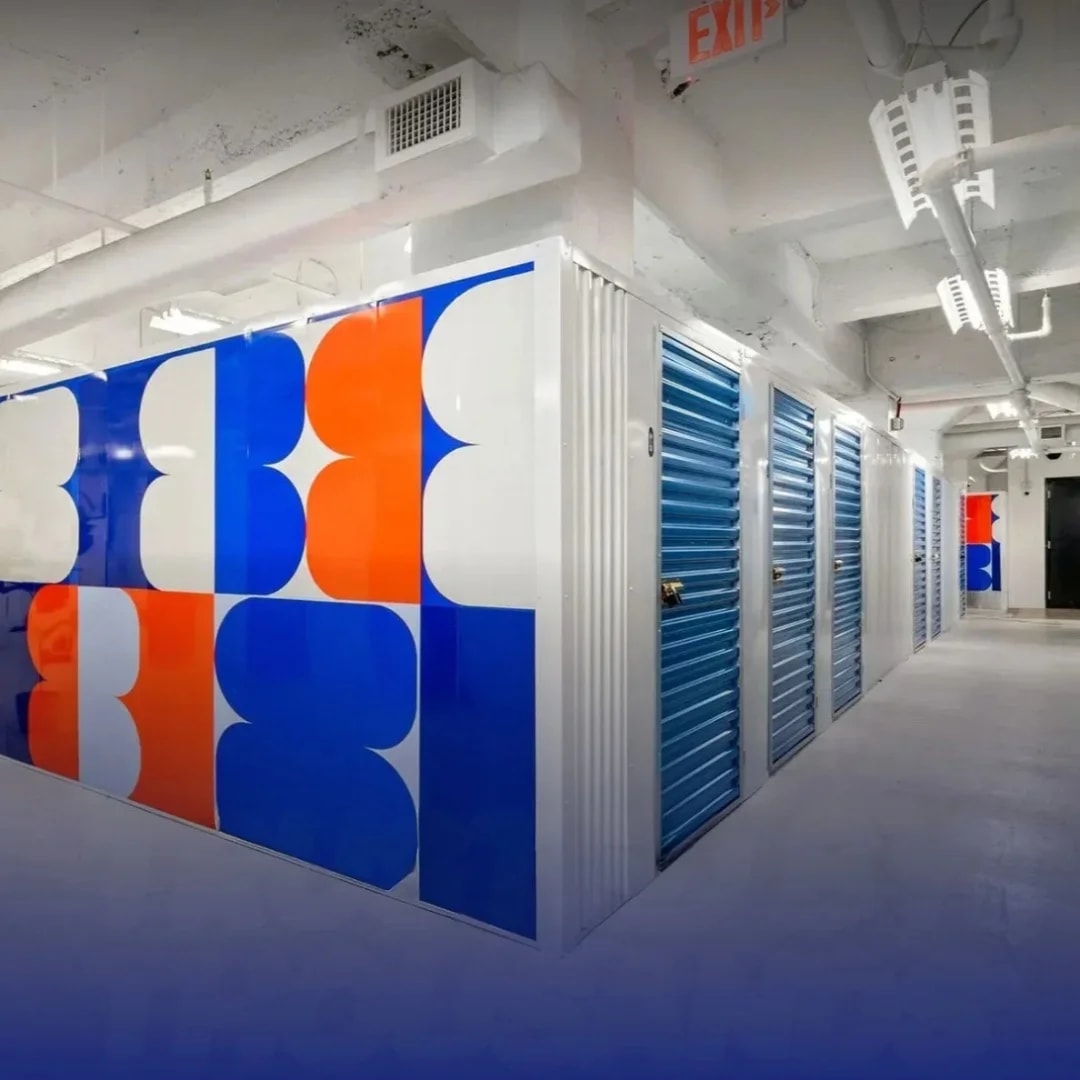
These are the sizes Stuf rents and what each one holds. Cubic feet matter more than square feet here, because units are roughly eight feet tall and most people stop stacking at shoulder height.

Small: 3x5, 5x5, and 5x10
The 3x5 gives you 15 square feet and up to 200 cubic feet. It behaves like a small walk-in closet. Seasonal clothing, a few boxes of documents, sports equipment, a bike if you take the front wheel off. This is the size most storage companies don't advertise, and it's frequently the right one for an apartment.
The 5x5 is 25 square feet, around 250 cubic feet, and holds about what a standard closet holds. A chest of drawers, a mattress on its side, ten to fifteen boxes. This is the studio-apartment size.
The 5x10 doubles that to 50 square feet and up to 400 cubic feet. Think walk-in closet with room to walk in. A one-bedroom's overflow fits here: sofa, mattress, boxes, a bike with both wheels attached.
Medium: 6x10 and 10x10
The 6x10 is 60 square feet, roughly a small bedroom. It takes a mix of medium furniture and packed boxes without the tetris. If a 5x10 is close but you can already tell it will be tight, this is the one to take.
The 10x10 is 100 square feet, about a standard bedroom, and among the most commonly rented sizes in the industry. It holds the contents of a one to two-bedroom apartment: a full living room set, appliances, a bedroom, and boxes on top.
Large: 10x15 and 10x20
The 10x15 gives you 150 square feet, about a large bedroom or a small garage. Multiple rooms of furniture, bulky items, and the things that don't disassemble.
The 10x20 is 200 square feet, genuinely a one-car garage. This holds an entire household, and in a city it's more often a business than a home: inventory, equipment, records.
Two sizes on this list are worth knowing about specifically because most national operators skip them. The 3x5 and the 6x10 sit exactly where apartment storage actually lands, in the gaps between the standard 5x5, 5x10 and 10x10. If you've priced storage elsewhere and everything felt like too much unit, that's usually why.
See what's available near you
Stuf units sit inside buildings you already walk past. Check sizes and prices in your neighborhood.
How Do You Measure Without a Tape Measure?
You don't need the dimensions of your furniture. You need three answers.
-
Count the rooms, not the objects. Walk the apartment and name what's leaving: "half the living room, the hall closet, the bikes." Two part-rooms is a 5x10. One full bedroom is a 6x10 or 10x10.
-
Find your largest single item and measure only that. A sofa, a mattress, a dining table. Everything else packs around it, but the largest item sets the floor on what size works, and it also determines whether the unit's door and the building's elevator are wide enough. This is the measurement people skip and regret.
-
Add a third for access. If you plan to retrieve anything before you empty the unit, you need a path to the back. A unit packed wall to wall is a unit you have to unpack in the hallway. Size up one step if you'll visit more than twice.

If you'd rather see the dimensions laid out with photos, the storage unit size guide has each size with what fits inside it.
Where People Get the Size Wrong
The two failures are opposite and cost differently.
Renting too big is the more expensive mistake, because it's invisible. Nobody notices they're overpaying for empty space, so the unit stays that size for the length of the rental. Renting too small announces itself immediately, on the day you're standing in the corridor with a sofa.
The asymmetry matters for how you decide. If you're between two sizes and you're storing dense items like boxes, books, and documents, take the smaller one. If you're between two sizes and there's furniture involved, take the larger one, because furniture doesn't compress and an awkward shape wastes more space than you'd guess.
One more thing worth checking before you sign anything: what the monthly rate includes. Administrative fees, required insurance, and a rate increase a couple of months after move-in are all common in this industry and none of them appear on the size chart. Our breakdown of self-storage costs covers what the listed price usually leaves out.
Frequently Asked Questions
What is the most common storage unit size?
The 10x10 is the most rented size across the industry, at 100 square feet or roughly a standard bedroom. In dense cities the practical answer is smaller: apartment storage tends to land between a 3x5 and a 5x10, because what people store is overflow rather than a whole household.
What size storage unit do I need for a one-bedroom apartment?
A full one-bedroom's contents fit in a 10x10. If you're only storing the overflow rather than emptying the apartment, a 5x10 is usually enough, and a 6x10 gives you room to reach the back.
How tall are storage units?
Most units are around eight feet high. That vertical space is why cubic feet matter more than square feet: a 3x5 holds up to 200 cubic feet, and a 5x10 up to 400, but only if you stack properly rather than filling the floor.
Will my mattress fit in a 5x5 storage unit?
A mattress fits in a 5x5 stored on its side against a wall, which leaves the remaining floor for boxes. A bed frame, a mattress and a dresser together need a 5x10.
Is it cheaper to rent one large unit or two small ones?
One larger unit is almost always cheaper per square foot than two small ones, and it's a single access trip. Two units only make sense when the contents need different conditions, such as climate-controlled storage for anything sensitive to heat and humidity.
Sizing is the decision that's hardest to reverse cheaply, because it's the one you make before you've seen the space. If you're close to the line, look at the unit in person or check the dimensions against your largest item before you commit. You can browse available units and sizes by neighborhood to see what's actually near you.
Storage without the fine print
One price, month to month terms, no hidden fees. Plus an extra $50 off each of your first 2 months with code STUFBLOG50.