About us
At a Glance
Property: 8 Tremont St / 37 Court Square, Boston
Partner: Jamestown
Space: 2,000 sq. ft. overflow storage → 40 self-storage units (4x7 ft to 9x9 ft)
Highlights: $32 psf/year | 90% occupancy in 1 month | $1.1M in building value | Covered by Multi-Housing News & Yahoo Finance
The challenge
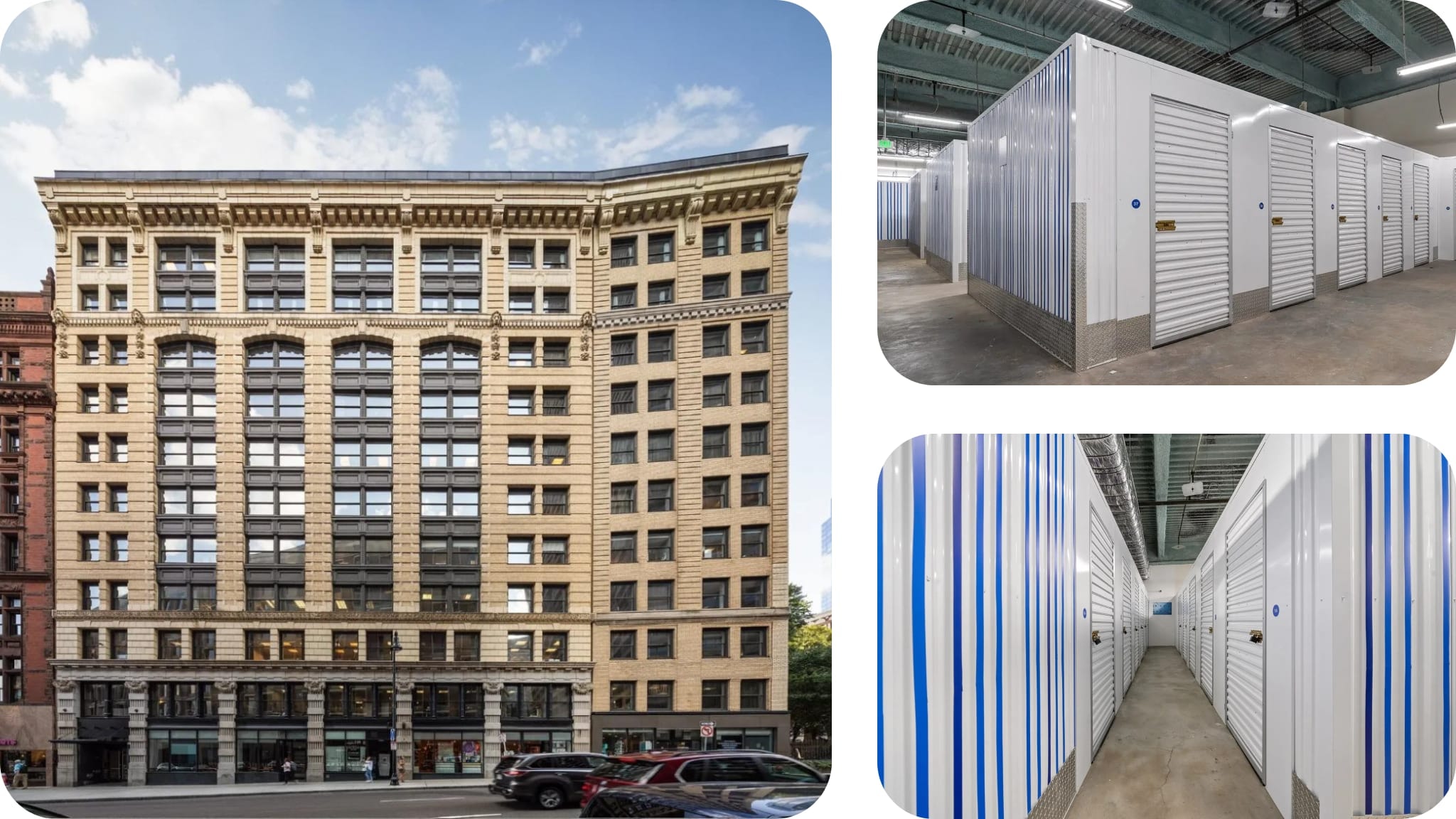
At 8 Tremont St / 37 Court Square in downtown Boston, Jamestown had roughly 2,000 square feet of overflow storage space that wasn't generating any income for the building. It was functional square footage, just not productive square footage.
The solution
Jamestown partnered with Stuf to convert the space into 40 self-storage units ranging from 4x7 ft to 9x9 ft, built out as a keyless, app-accessed facility with 24/7 AI-camera security. The conversion turned an operational cost center into a leasable amenity, without requiring any change to the building's core tenant mix.
The results
The facility reached 90% occupancy within a single month of opening, generating $32 per square foot annually. That new income stream added an estimated $1.1M in building value, and the project was covered by Multi-Housing News and Yahoo Finance.
Why it worked
Downtown Boston has a dense mix of office workers, residents, and small businesses, all of whom regularly need storage but rarely have a convenient option close by. Because the facility sits inside a building people already pass through daily, Stuf was able to fill units quickly instead of waiting on demand to build from scratch.
What this means for other owners
Overflow or storage space that isn't part of a building's primary leasing plan is often the easiest place to start looking for new income. Jamestown's result, reaching 90% occupancy in a month, shows how quickly that kind of space can convert once it's built out properly. See similar results from The Swig Company in Los Angeles and a Brooklyn developer.
FAQ
How fast did the facility reach 90% occupancy?
One month from opening.
How much value did the conversion add to the building?
Roughly $1.1M, driven by the new $32 psf/year income stream from space that wasn't previously leased.
What size units were built?
Units ranging from 4x7 ft to 9x9 ft, across 40 total units in the converted space.
Why did overflow storage space convert so quickly?
The space was already inside a building people passed through every day, in a dense downtown location. That existing foot traffic and proximity meant demand didn't need to be built from scratch the way it would for a stand-alone facility.
What this looks like for a space you're evaluating
Overflow storage, back-of-house rooms, and other space that isn't part of a building's core leasing plan are often the easiest starting point, since converting them doesn't require displacing an existing tenant. If your building has square footage sitting in a similar spot, talk to Stuf about your property to see what it could look like.
Did the conversion require any structural changes to the building?
The build-out was contained to the existing overflow storage footprint, so it didn't require reworking the building's core layout or displacing another tenant to make room.
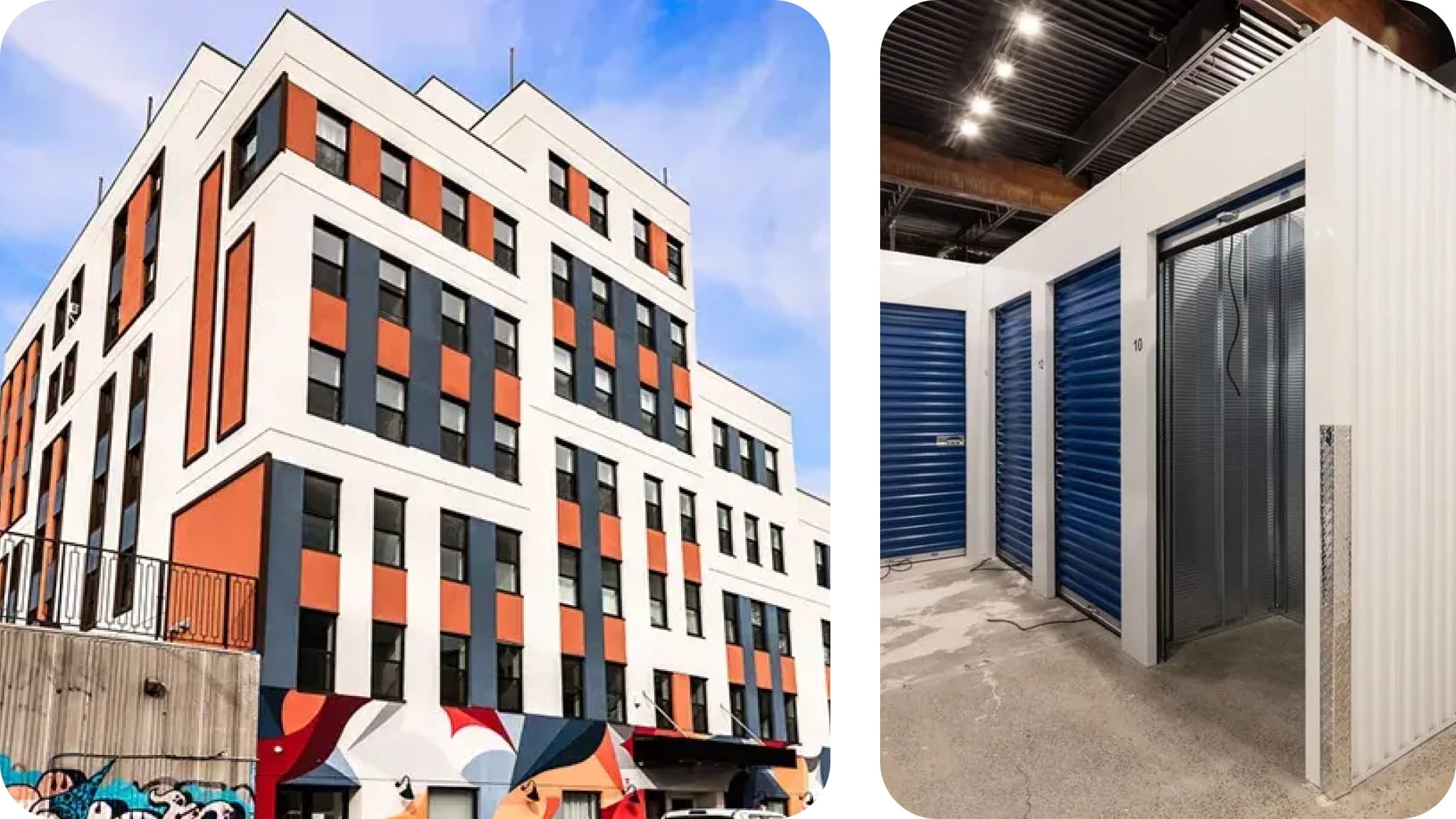
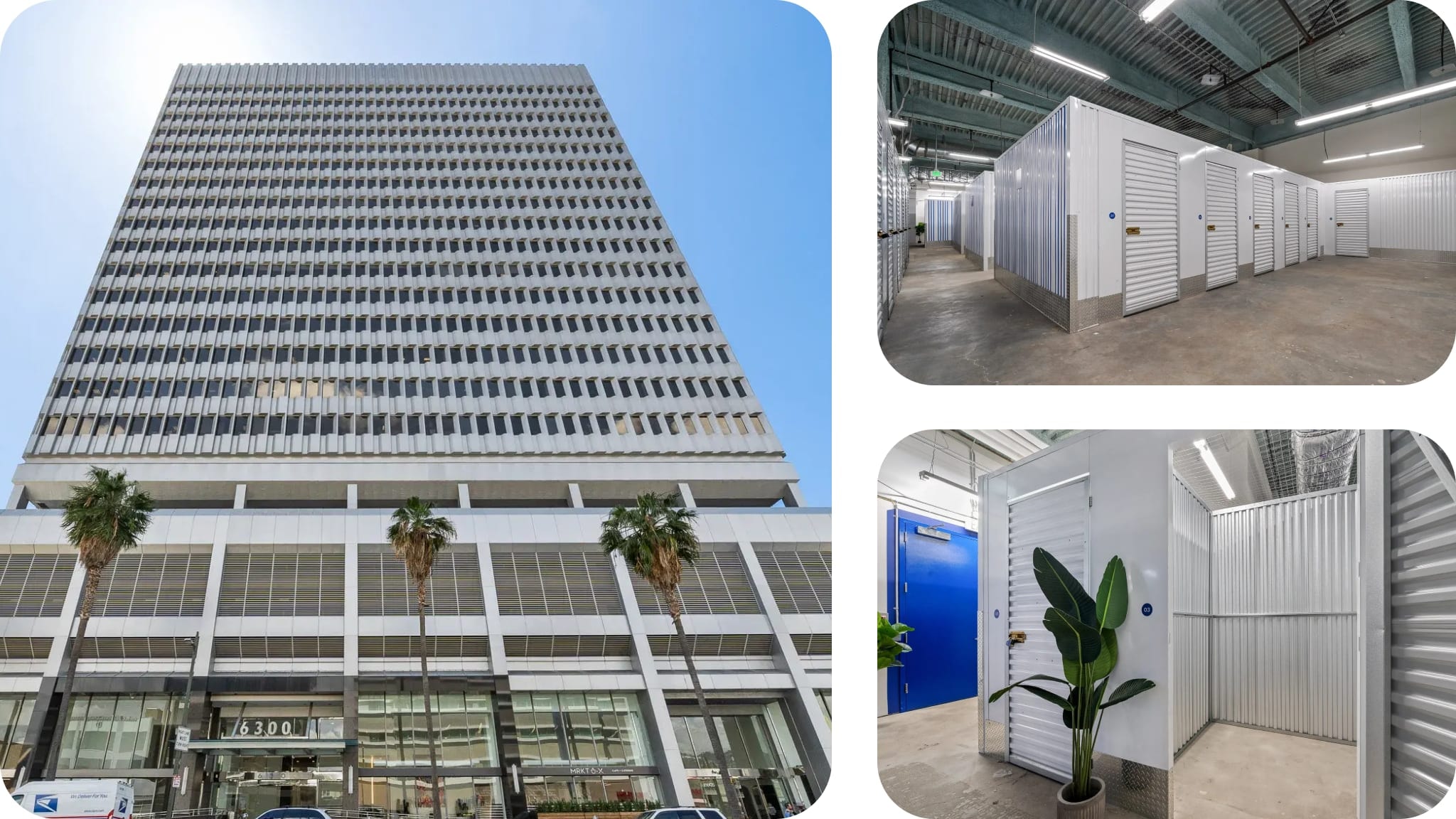
For comparison, see how a Brooklyn basement conversion and the Swig Company mezzanine project played out in very different building types.